Category: Cleaning Tips

  • Is Your Kitchen Sponge a Germ Factory?

    Is Your Kitchen Sponge a Germ Factory?

    The sponge next to your sink looks harmless. Science says otherwise.

    What researchers found inside used sponges

    In 2017, microbiologists at Furtwangen University in Germany studied 14 used kitchen sponges. They found 362 different types of bacteria. In some spots, the density reached 45 billion bacteria per square centimetre, comparable to a toilet. Most were harmless, but some were related to bacteria that can cause infections. (Study: Scientific Reports, 2017)

    The researchers also found that sponges their owners “cleaned” regularly, in the microwave or with hot water, were not germ-free.

    Why sponges and green scrub pads trap germs

    Bacteria need three things: water, food and warmth. A dishwashing sponge gives them all three.

    • Holds water: foam soaks up water and stays wet for hours, often until the next wash.
    • Traps food: tiny pores and dense fibres hold bits of dal, rice and oil that you cannot rinse out.
    • Warm and dark inside: the inside of a sponge or thick green pad never dries in a humid Indian kitchen.

    Green scrub pads have the same dense, fibre-packed build, so food and water get trapped inside them too. They are also rough enough to scratch non-stick coatings.

    Why a wire mesh cloth stays cleaner

    A KRHE steel wire dish wash cloth is built differently, and it beats both the sponge and the green cloth on hygiene for two simple reasons: it dries quickly, and dirt and food particles do not stick to it. They rinse straight off the smooth metal-coated mesh under running water.

    Foam sponge / green pad KRHE wire mesh cloth
    Structure Thick, porous, packed fibres Thin, open mesh
    Water held after use A lot Very little
    Drying time Hours, often stays damp Dries fast
    Food stuck inside Hard to rinse out Particles don’t stick, rinse off under the tap
    Safe on non-stick Green pad can scratch Non-scratch

    A cloth that dries fast and holds no trapped food gives bacteria nowhere to grow. That is why the wire mesh cloth is the cleaner choice over a sponge or green cloth.

    Keep any scrubber cleaner

    1. Rinse it well after every use until no food is left.
    2. Squeeze out water and hang it to dry; never leave it in a wet sink.
    3. Keep separate scrubbers for utensils and for counters.
    4. Replace it regularly, as soon as it smells or looks worn.

    Switch to a cleaner scrubber

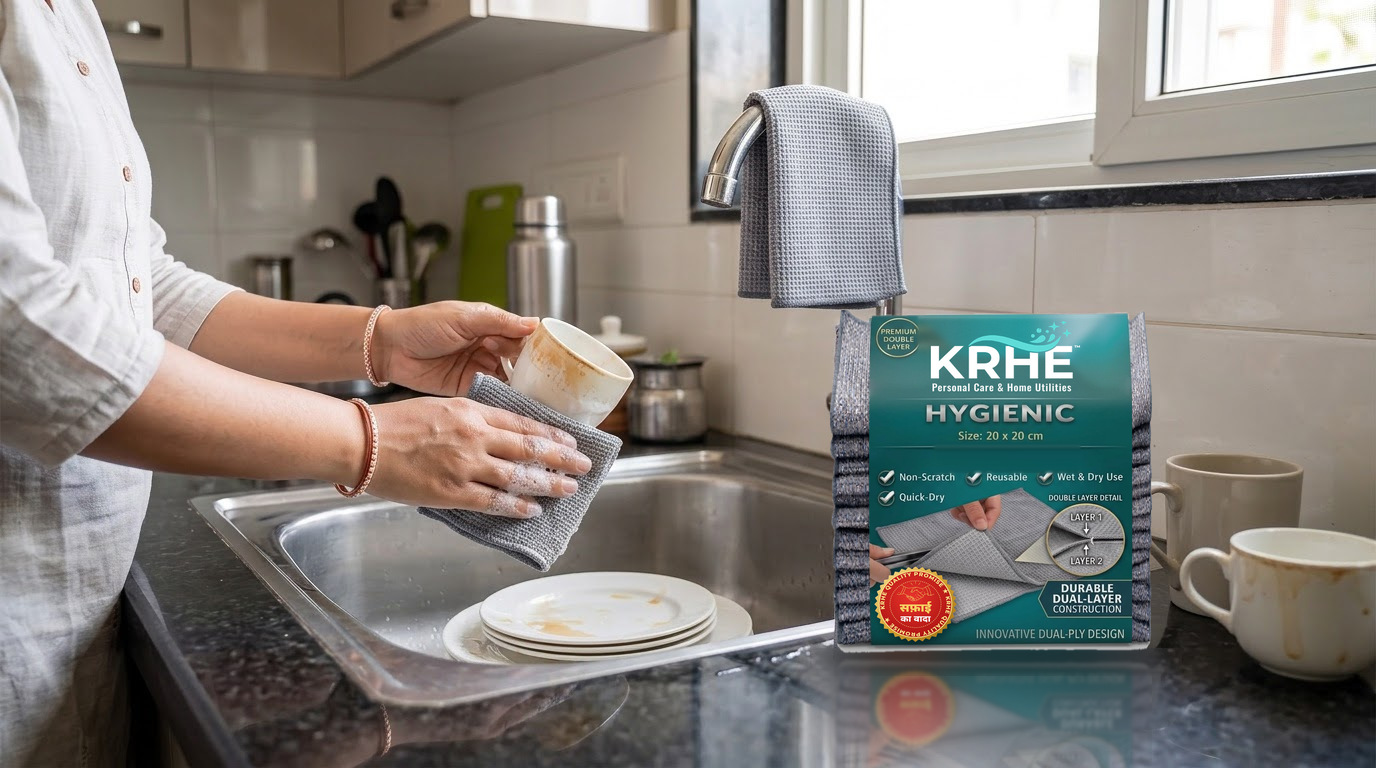
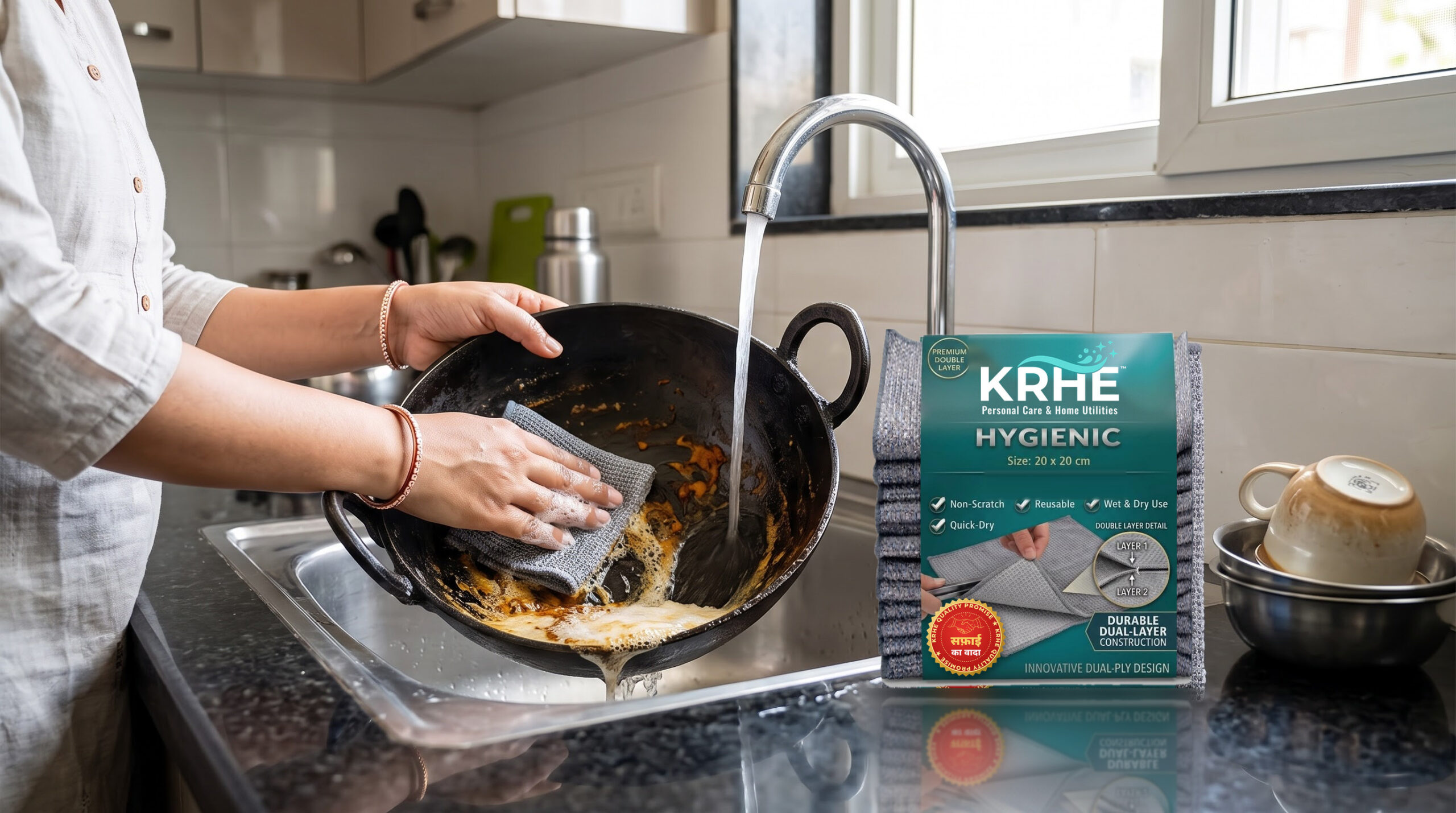
    The KRHE Single Layer is for daily dishes and non-stick; the KRHE Double Layer is for burnt kadai and greasy stoves. Packs of 5, 15 and 25, free delivery across India. Safai ka Wada.
  • Can You Use a Wire Cloth on a Non-Stick Pan?

    Can You Use a Wire Cloth on a Non-Stick Pan?

    Short answer: not steel wool, but yes to a non-scratch wire mesh cloth used gently. The difference is in how the scrubber is made.

    Why steel wool damages non-stick

    Steel wool is made of thin, sharp metal strands. They cut into the non-stick coating, and once it is scratched, food sticks and the coating starts peeling.

    How a non-scratch wire cloth is different

    A wire dish wash cloth like KRHE is a soft cotton mesh with a metal-flake coating. There are no sharp strands. It lifts grease and food without cutting the surface.

    How to clean a non-stick pan safely

    1. Let the pan cool completely.
    2. Soak in warm water with dishwash liquid for 5 minutes.
    3. Wipe with a single layer wire cloth using light pressure.
    4. Rinse and dry with a soft cloth.

    Non-stick cleaning: do and don’t

    Do Don’t
    Use warm water and mild dishwash liquid Use steel wool or a metal spatula
    Use a single layer non-scratch cloth Scrub hard on a hot pan
    Dry fully after washing Soak overnight

    Our pick for non-stick

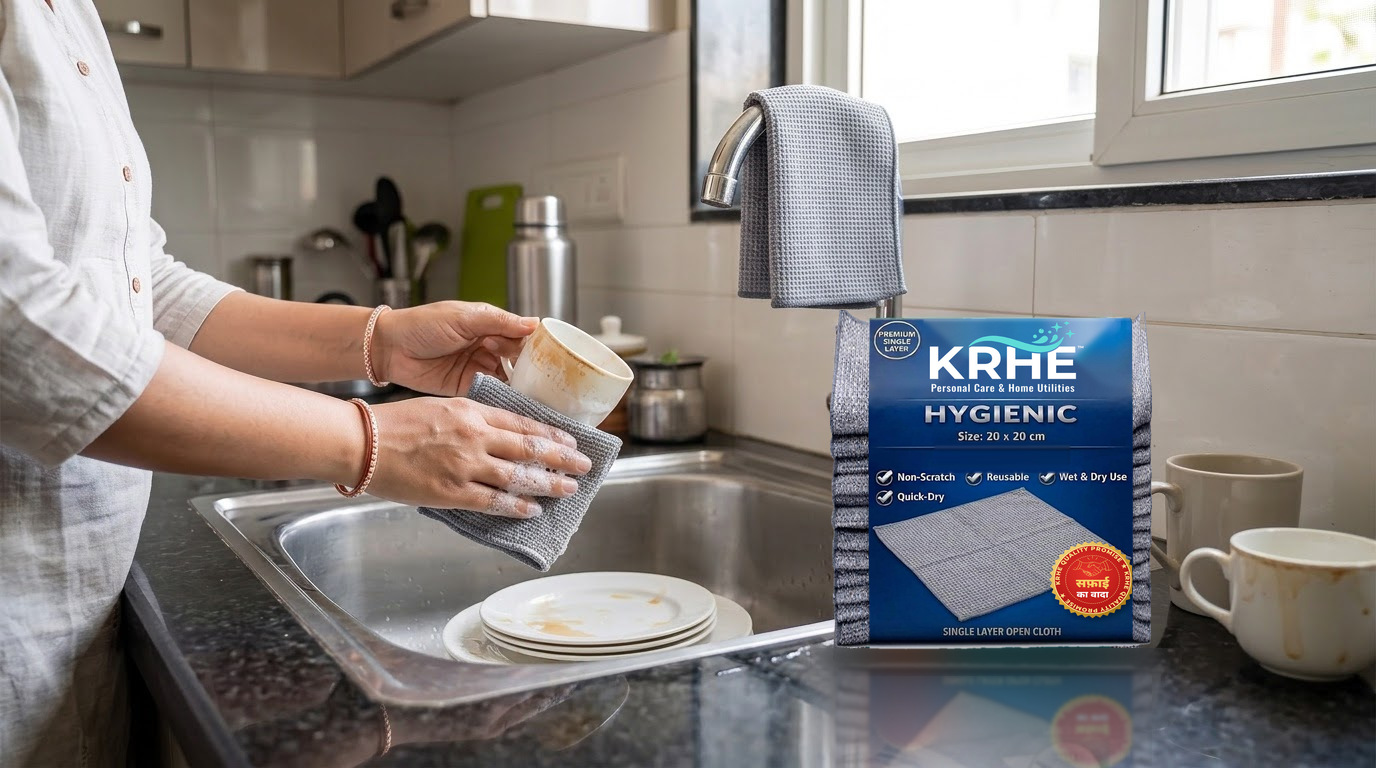
    The KRHE Single Layer Steel Wire Dish Wash Cloth is soft enough for non-stick pans and tawa, and strong enough for daily grease. Packs of 5, 15 and 25, free delivery.

  • How to Clean a Burnt Kadai Without Scratching It

    How to Clean a Burnt Kadai Without Scratching It

    Every Indian kitchen has a burnt kadai at some point — a sabzi left too long on the flame, milk that boiled over, or oil that turned black. Steel wool scrubs it clean, but it also leaves scratches that make food stick next time. Here is how to clean a burnt kadai without damaging it.

    Step 1: Let it cool, then soak in hot water

    Never pour cold water into a hot kadai; it can warp the metal. Let it cool for 10 minutes, then fill it with hot water and a spoon of dishwash liquid. Leave it for 15–20 minutes.

    Step 2: Boil with baking soda for stubborn burns

    For thick black layers, add 2 tablespoons of baking soda to the water and boil for 5 minutes. The burnt layer softens and starts lifting off.

    Step 3: Scrub with a non-scratch wire cloth

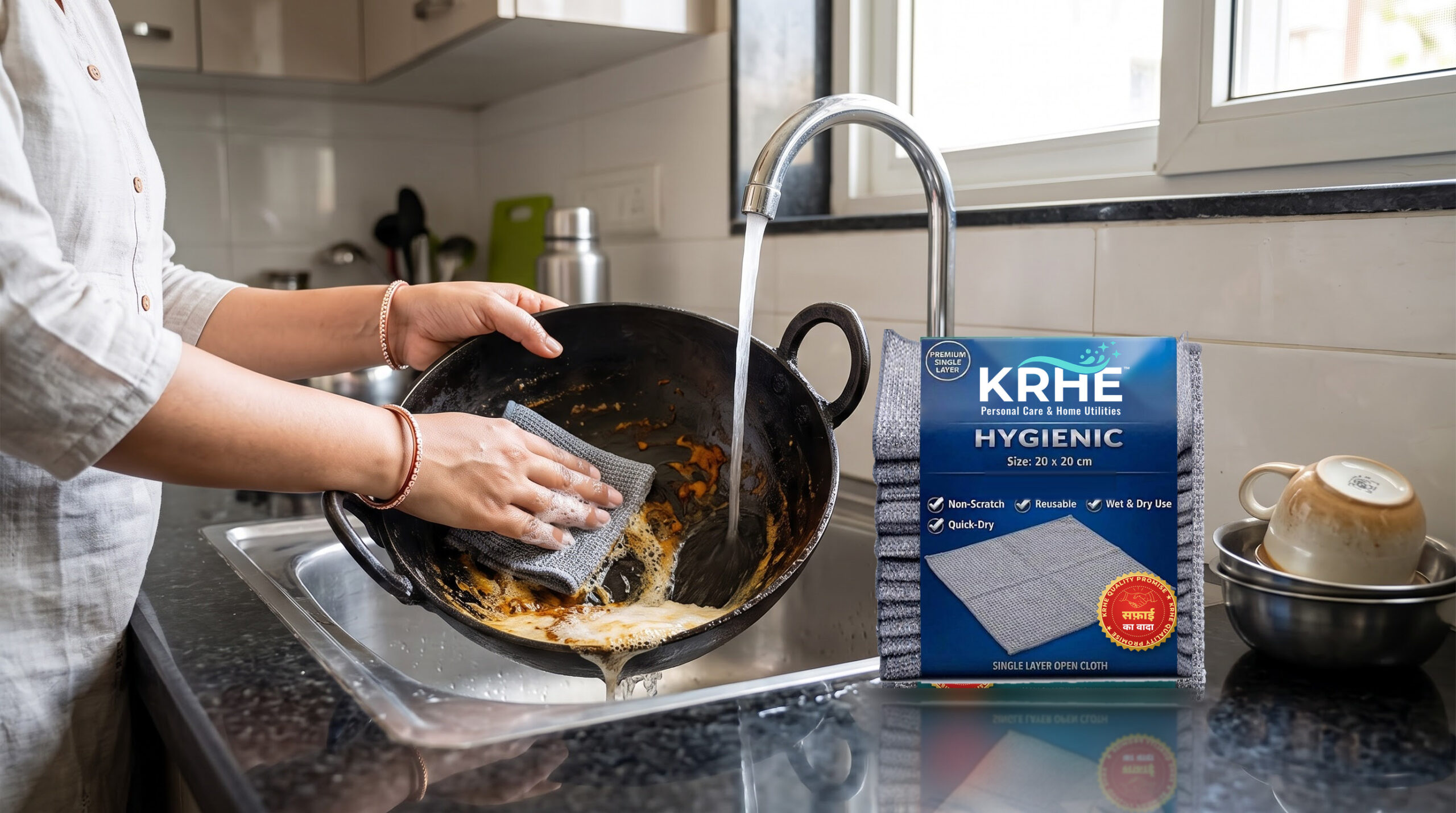
    Use a double layer steel wire dish wash cloth. It has enough grip to remove burnt residue but does not dig into the surface like steel wool. Scrub in circles, not straight lines.

    Step 4: Use salt for leftover spots

    Sprinkle coarse salt on remaining spots and scrub with the cloth. Salt works as a gentle abrasive.

    Step 5: Rinse, dry, and oil (iron kadai only)

    Rinse with warm water and dry fully on the flame. For an iron kadai, rub a few drops of oil inside to stop rust.

    What not to use

    • Steel wool or a knife — leaves deep scratches
    • Bleach — damages the metal and is unsafe for cookware
    • Harsh scrubbing on non-stick — use the single layer cloth gently instead

    The right cloth makes the difference

    The KRHE Double Layer Steel Wire Dish Wash Cloth is made for jobs like this: tough on burnt food, gentle on your kadai. Reusable, quick-dry, with free delivery across India.

  • Steel Scrubber vs Wire Mesh Cloth: Which Is Better?

    Steel Scrubber vs Wire Mesh Cloth: Which Is Better?

    Most Indian kitchens use a steel scrubber (the round steel wool ball). Wire mesh dish cloths are newer. Each has a job it does best.

    Side by side

    Steel scrubber Wire mesh cloth
    Best for Heavy iron kadai, tandoor tray Daily dishes, non-stick, glass
    Scratch risk High on non-stick and glass Low
    Strands breaking off Yes, small pieces can stick to utensils No loose strands
    Drying Holds water, can rust Thin mesh, dries fast
    Covers Small area 20×20 cm flat surface

    When to choose a steel scrubber

    For heavy-duty jobs on iron or thick steel where scratches don’t matter: tandoor trays, iron tawa, outdoor cooking vessels.

    When to choose a wire mesh cloth

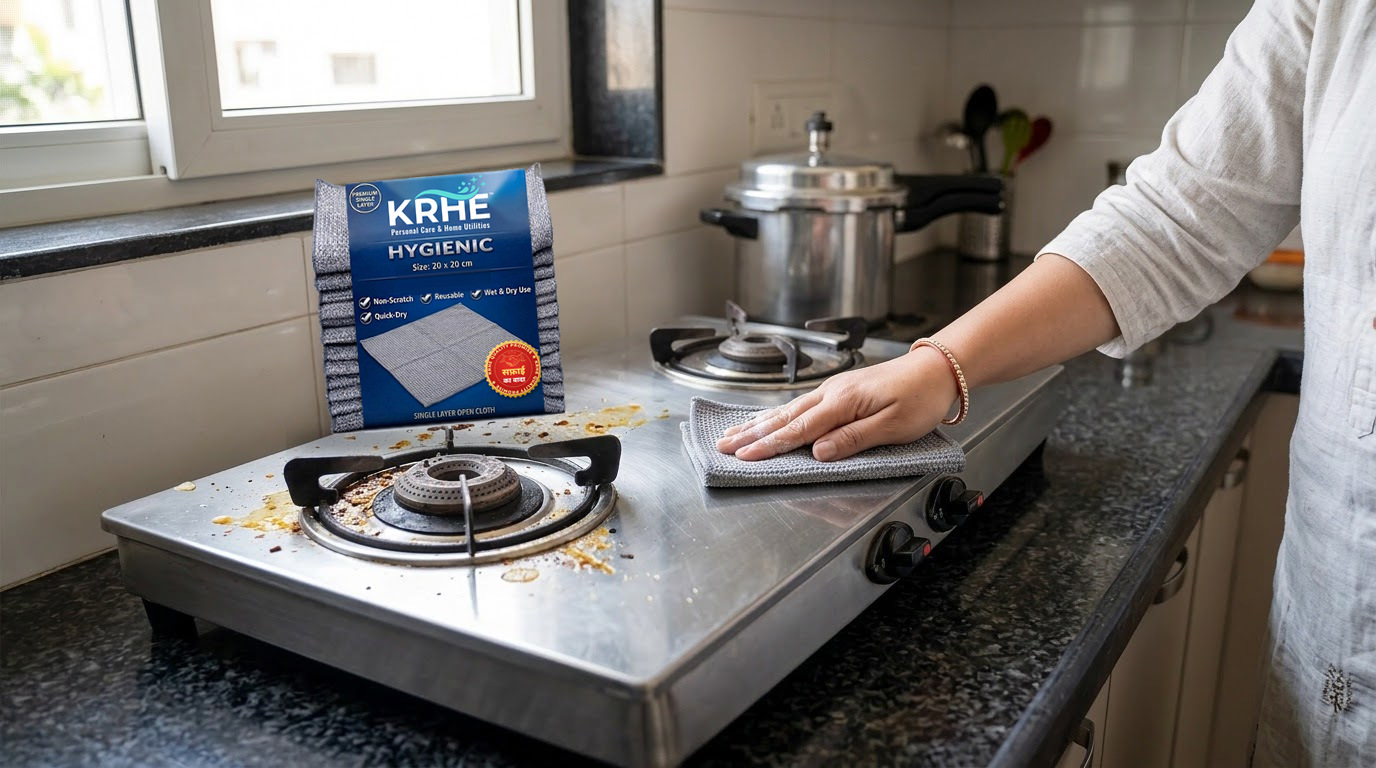
    For everything else: plates, cups, non-stick pans, glass and gas stove tops. A metal scrubbing cloth for utensils cleans as well for daily grease without the scratch risk.

    Best of both

    Keep one of each: a steel scrubber for heavy iron, and a KRHE wire dish wash cloth for everyday use.

  • कड़ाही साफ़ करने का सबसे आसान तरीका (Kadai Saaf Karne Ka Tarika)

    कड़ाही साफ़ करने का सबसे आसान तरीका (Kadai Saaf Karne Ka Tarika)

    सब्ज़ी जल गई, दूध उबलकर गिर गया, या तेल काला पड़ गया — हर रसोई में कभी न कभी कड़ाही जलती है। स्टील वूल से रगड़ने पर कड़ाही में खरोंच आ जाती है। यहाँ है आसान तरीका:

    1. ठंडा होने दें: गरम कड़ाही में ठंडा पानी न डालें। 10 मिनट रुकें।
    2. गरम पानी में भिगोएँ: गरम पानी और एक चम्मच डिशवॉश लिक्विड डालकर 15 मिनट छोड़ दें।
    3. बेकिंग सोडा: ज़्यादा जली हो तो 2 चम्मच बेकिंग सोडा डालकर 5 मिनट उबालें।
    4. जाली वाले कपड़े से रगड़ें: डबल लेयर स्टील जाली कपड़ा जली हुई परत हटाता है और खरोंच नहीं डालता।
    5. नमक से बचे दाग: मोटा नमक छिड़ककर दोबारा रगड़ें।
    6. सुखाएँ: धोकर आँच पर सुखाएँ। लोहे की कड़ाही में थोड़ा तेल लगा दें ताकि जंग न लगे।

    कौनसा कपड़ा लें?

    5, 15 और 25 के पैक में, पूरे भारत में फ़्री डिलीवरी। सफ़ाई का वादा।